
You bought a gorgeous new doormat—only to realize you’ve got no idea where it belongs. Inside? Outside? Both? You’re not alone. Most homeowners slap one down wherever there’s space, then wonder why their entryway stays muddy, smelly, or worn out in weeks. The truth is: placement dictates performance. And getting it wrong costs you cleanliness, safety, and even money.
The Core Problem: Why Standard Advice Fails
“Put it outside” seems obvious. But what if rain soaks it daily? Now it’s a soggy biohazard that tracks water in. “Place it inside” sounds cleaner—until winter grit scratches your hardwood like sandpaper.
Here’s the reality: most homes need two mats. Not one. Not optional. Mandatory.
But manufacturers won’t tell you that—it cuts into the illusion of a “universal” product. And retailers? They’d rather sell you one $30 mat than admit you really need two specialized ones.
Do Doormats Go Inside or Outside? The Step-by-Step Guide
Stop guessing. Start layering. Think of your entryway like an airlock on a spaceship—decontamination happens in stages.
Outside Mat: Scrub Before You Step
Your outdoor mat must be rugged, weather-resistant, and coarse enough to scrape mud, snow, and debris off shoes. Look for coir, rubber, or polypropylene with deep grooves. Never use fabric or cotton outdoors—they rot fast.
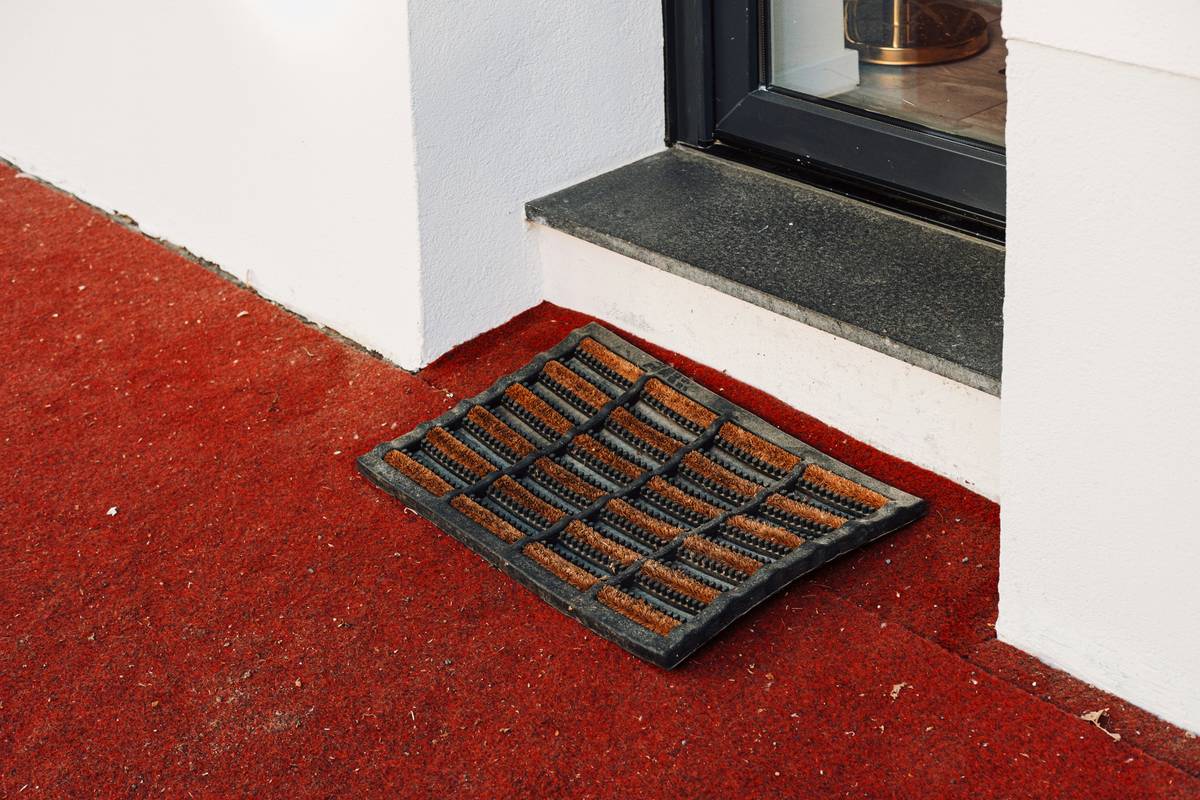
Inside Mat: Trap What’s Left
Even after outdoor scraping, fine dust, salt, and moisture remain. Your indoor mat catches those. Choose absorbent, low-pile materials like microfiber or chenille. Bonus: non-slip backing prevents slips on tile or wood.
| Location | Best Material | Key Function | Average Lifespan |
|---|---|---|---|
| Outside | Coir, Rubber, Polypropylene | Scrape heavy debris & resist weather | 1–2 years (exposed to elements) |
| Inside | Microfiber, Chenille, Cotton Terry | Absorb moisture & trap fine particles | 2–3 years (protected environment) |

The Industry Secret: The “Double-Mat System” No One Markets
Commercial buildings—airports, hotels, hospitals—use a dual-mat protocol: 6–8 feet of outdoor scraping surface followed by 4–6 feet of indoor absorption. Why? Because OSHA and insurance standards demand it. Slip-and-fall claims cost businesses millions.
Yet residential brands pretend one mat suffices. Don’t fall for it. Spend $25 on an outdoor scraper and $20 on an indoor absorber. That $45 investment prevents $2,000 in floor refinishing—or worse, a liability incident.
And here’s a pro tip: replace your outdoor mat every 12–18 months. UV exposure degrades fibers silently. It might look fine—but its scraping power is gone.
FAQ
Can I use the same doormat inside and outside?
No. Outdoor mats aren’t absorbent; indoor mats can’t handle weather. Using one for both leads to rapid wear and poor performance.
How far should the outdoor doormat extend from the door?
Ideal length: at least 18 inches. Better yet—long enough for 3 full steps. Most people only take 1–2 steps before crossing the threshold.
Do doormats really reduce indoor cleaning time?
Absolutely. Studies show entryway mats capture up to 80% of tracked-in soil. Two properly placed mats cut vacuuming frequency by nearly half.